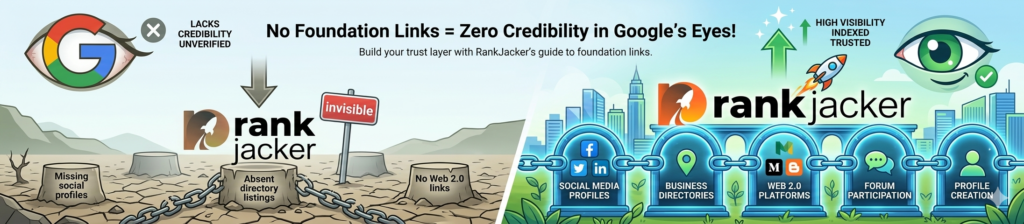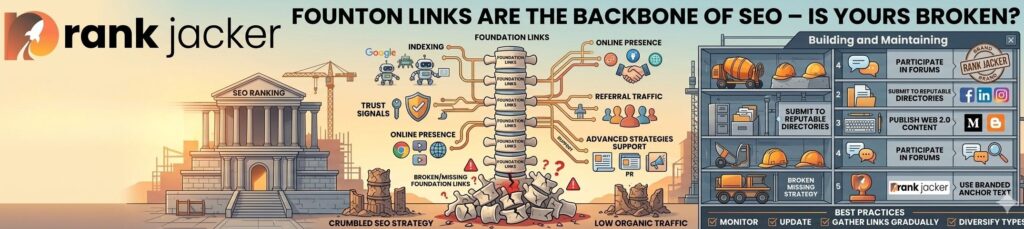
Every business wants to dominate online, but if your website lacks foundation links, you’re effectively handing customers to your competitors.
Foundation links are early-stage backlinks that establish your site’s trust, authority, and discoverability. Without them, competitors who invest in these essential links outrank you, attract your target audience, and capture potential revenue.
Even with strong content, marketing, or design, your website cannot compete if its foundation is weak. This guide explains why foundation links are critical, the risks of ignoring them, and actionable steps to reclaim your competitive edge.
What Are Foundation Links?
Foundation links are basic, early-stage backlinks that signal credibility and presence to search engines.
Common sources include:
- Social media profiles (Facebook, LinkedIn, Instagram, Twitter/X)
- Business and industry directories
- Web 2.0 blogging platforms like Medium, WordPress.com, and Blogger
- Profile creation websites
- Forums and online communities
Unlike high-authority backlinks, foundation links focus on visibility, trust, and indexing, forming the backbone of your website’s SEO strategy.
How Missing Foundation Links Hands Business to Competitors
Ignoring foundation links creates significant disadvantages:
1. Competitors Rank Higher in Search
- Google favors websites with backlinks that signal trust and authority.
- Competitors with foundation links are more likely to appear on page one of search results.
- Without your own foundation links, your target audience sees them first, not you.
Even with superior products, missing foundation links means lost opportunities to capture traffic.
2. Reduced Credibility and Trust
Backlinks serve as votes of confidence.
- Without foundation links, your site appears unverified or low-quality to Google.
- Competitors with strong link foundations gain trust faster, attracting more clicks and conversions.
Foundation links give your website the credibility needed to compete in crowded markets.
3. Limited Online Visibility
Foundation links from social profiles, directories, and Web 2.0 platforms create multiple digital touchpoints.
- Without these, your brand remains invisible in channels where competitors are active.
- Reduced visibility means your audience is more likely to engage with competitors instead.
Missing links limit exposure, letting competitors dominate the conversation in your niche.
4. Decreased Referral Traffic
Many foundation links drive direct referral traffic from directories, forums, and community profiles.
- Without them, your website loses potential visitors who could convert into customers.
- Competitors with diverse link profiles capture these visitors instead.
Foundation links open multiple paths for your audience to discover your brand.
5. Hindered Effectiveness of Advanced SEO and Marketing
High-authority backlinks, influencer campaigns, and PR coverage work best when your website has an established foundation.
- Without it, advanced campaigns have less impact.
- Competitors with foundation links gain a head start in authority, rankings, and conversions.
Ignoring foundational SEO creates a cumulative disadvantage over time.
Signs You’re Losing Business to Competitors
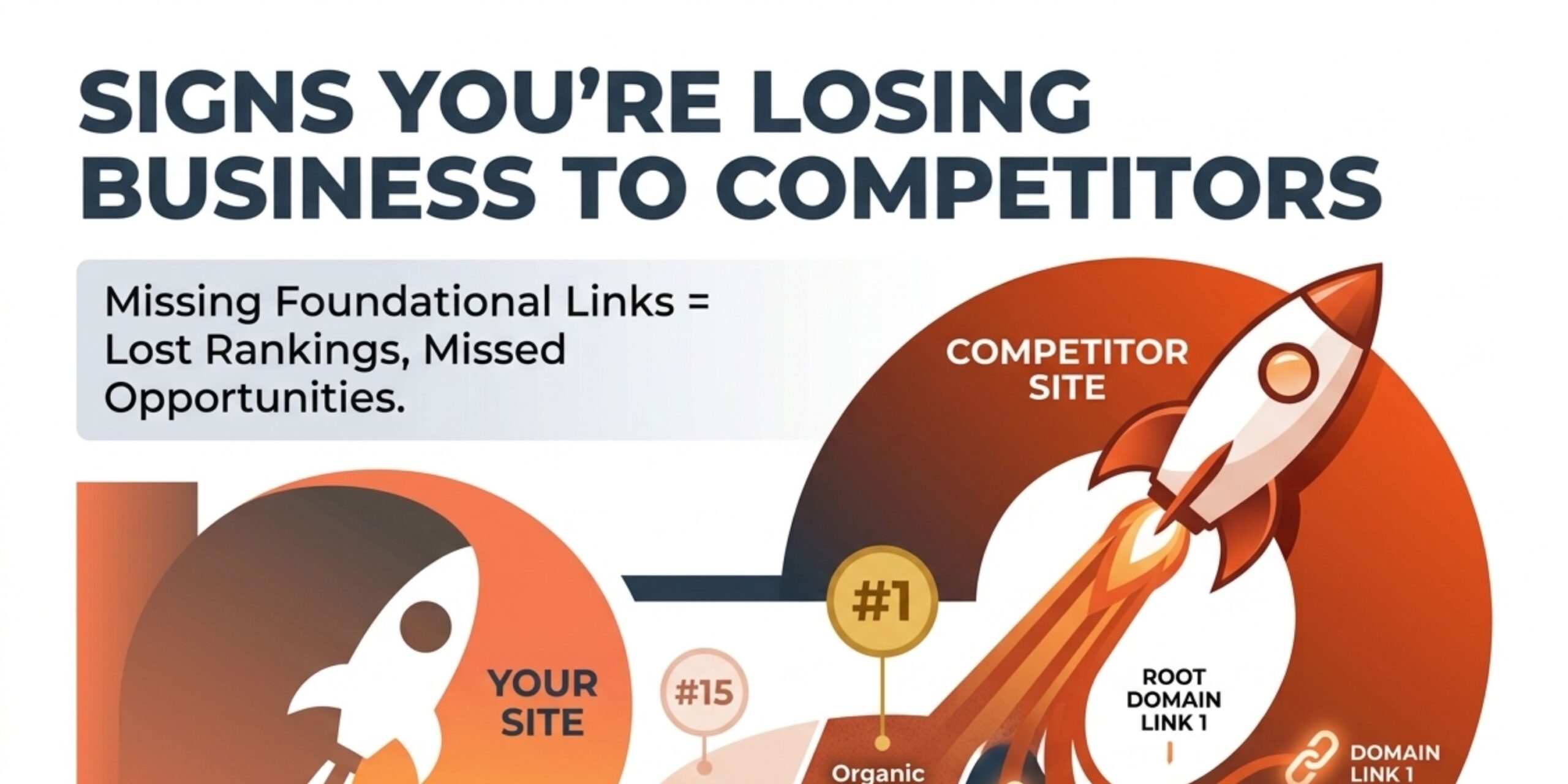
Your website may be underperforming due to missing foundation links if:
- Organic traffic is low despite high-quality content
- Competitors outrank you for key search terms
- Referral traffic is minimal
- Social and directory presence is weak or missing
- Advanced SEO campaigns have little effect
If these indicators are present, your competitors are capitalizing on opportunities your site cannot reach.
How to Build Foundation Links and Reclaim Your Market
Establishing foundation links is essential to strengthen SEO, visibility, and competitiveness.
1. Create Social Media Profiles
- Set up accounts on Facebook, LinkedIn, Instagram, Twitter/X, and other platforms relevant to your audience.
- Include website URLs and consistent branding.
- Regularly post updates to engage users and drive traffic.
Social links provide credibility, referral traffic, and multiple discovery paths.
2. Submit Your Website to Reputable Directories
- Use general and niche-specific directories.
- Ensure accurate, consistent business information.
Directory links enhance discoverability and act as credibility signals to Google.
3. Publish Content on Web 2.0 Platforms
- Platforms like Medium, WordPress.com, and Blogger allow backlinks to your site.
- Even brief posts help establish credibility and visibility.
Web 2.0 content extends reach and supports indexing, giving you a competitive edge.
4. Engage in Forums and Online Communities
- Participate in relevant niche forums and communities.
- Include your website in profiles or signatures naturally.
Community engagement drives referral traffic, builds trust, and increases visibility in spaces where competitors may be active.
5. Use Branded Anchor Text
- Foundation links should use your brand name or website URL.
- Avoid keyword-heavy anchors, which can appear manipulative.
Branded anchors reinforce identity and support natural SEO growth.
Best Practices for Maintaining Foundation Links
To ensure long-term competitiveness:
- Regularly monitor links to ensure they remain active
- Update directory and social profiles when information changes
- Add new foundation links gradually to maintain natural growth
- Diversify link sources to strengthen credibility and reach
A strong foundation link profile keeps your website visible, credible, and competitive in search results.
Outgoing Thoughts
No foundation links mean your website is giving competitors an advantage.
Without these essential backlinks, your SEO suffers, visibility drops, referral traffic declines, and your audience engages with competitors instead. Even superior content and marketing strategies cannot compensate for a weak foundation.
Building foundation links across social media, directories, Web 2.0 platforms, and community sites establishes credibility, improves search visibility, and secures your competitive position.
Stop handing business to competitors strengthen your foundation links today to reclaim your market share.
FAQs
Q1. What are foundation links?
Ans. Foundation links are early-stage backlinks that establish credibility, trust, and online visibility for a website.
Q2. How do missing foundation links benefit competitors?
Ans. Competitors gain higher rankings, trust, visibility, and referral traffic that your site misses.
Q3. Can a website compete without foundation links?
Ans. It may, but growth is slower, rankings are weaker, and competitors dominate the audience.
Q4. Which platforms are effective for foundation links?
Ans. Social media, reputable directories, Web 2.0 blogs, forums, and niche communities.
Q5. Should foundation links use keyword-rich anchors?
Ans. No, branded anchors or plain URLs appear more natural and credible.
Q6. How many foundation links should a new website start with?
Ans. 30–100 links across diverse platforms provide a solid foundation.
Q7. Can foundation links increase referral traffic?
Ans. Yes, they create multiple pathways for users to discover your website.
Q8. Do foundation links improve SEO for advanced campaigns?
Ans. Yes, they provide a credible base that makes high-authority backlinks and PR efforts more effective.
Q9. How often should foundation links be monitored?
Ans. Every few months to ensure links are active, accurate, and diverse.
Q10. What is the main benefit of foundation links for competing online?
Ans. They build credibility, improve visibility, attract traffic, and prevent competitors from dominating your target audience.