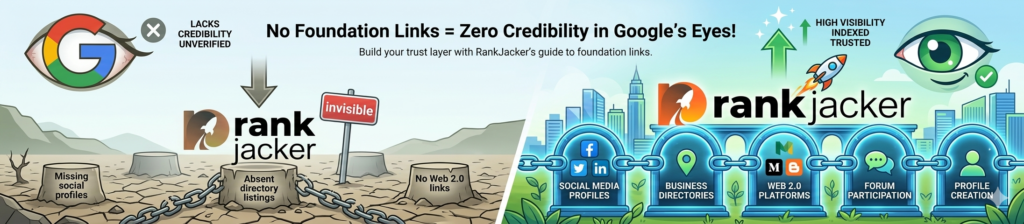
Getting traffic is easy. Getting the right traffic is where most websites fail.
Many websites attract random visitors who never convert, never engage, and never return. The missing piece is often not content or ads as it’s the lack of foundation links.
Foundation links are the base-level backlinks that establish your website’s trust, visibility, and discoverability across the web. They help search engines understand your site’s relevance and ensure it is shown to the right audience.
Without them, your website may still get traffic but not the kind that matters. In this guide, you’ll learn how foundation links directly influence traffic quality and why they are essential for attracting the right users.
What Are Foundation Links?
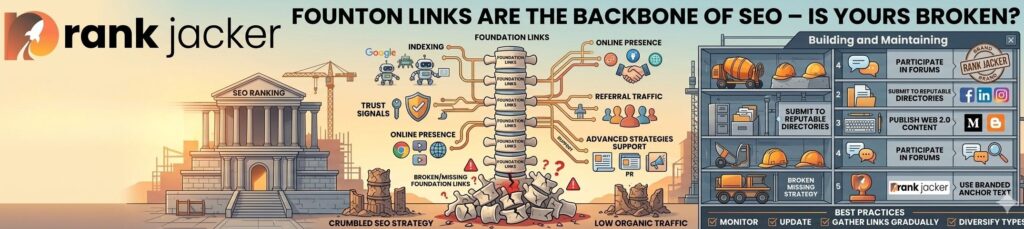
Foundation links are early-stage backlinks created to build credibility and establish your website’s presence online.
They typically come from:
- Social media profiles (Facebook, LinkedIn, Instagram, Twitter/X)
- Business and niche directories
- Web 2.0 platforms like Medium, WordPress.com, and Blogger
- Profile creation sites
- Forums and online communities
Unlike high-authority backlinks that aim to boost rankings directly, foundation links focus on trust signals, indexing, and relevance building. They are the base layer of a natural and effective SEO strategy.
How Foundation Links Bring More Relevant Traffic
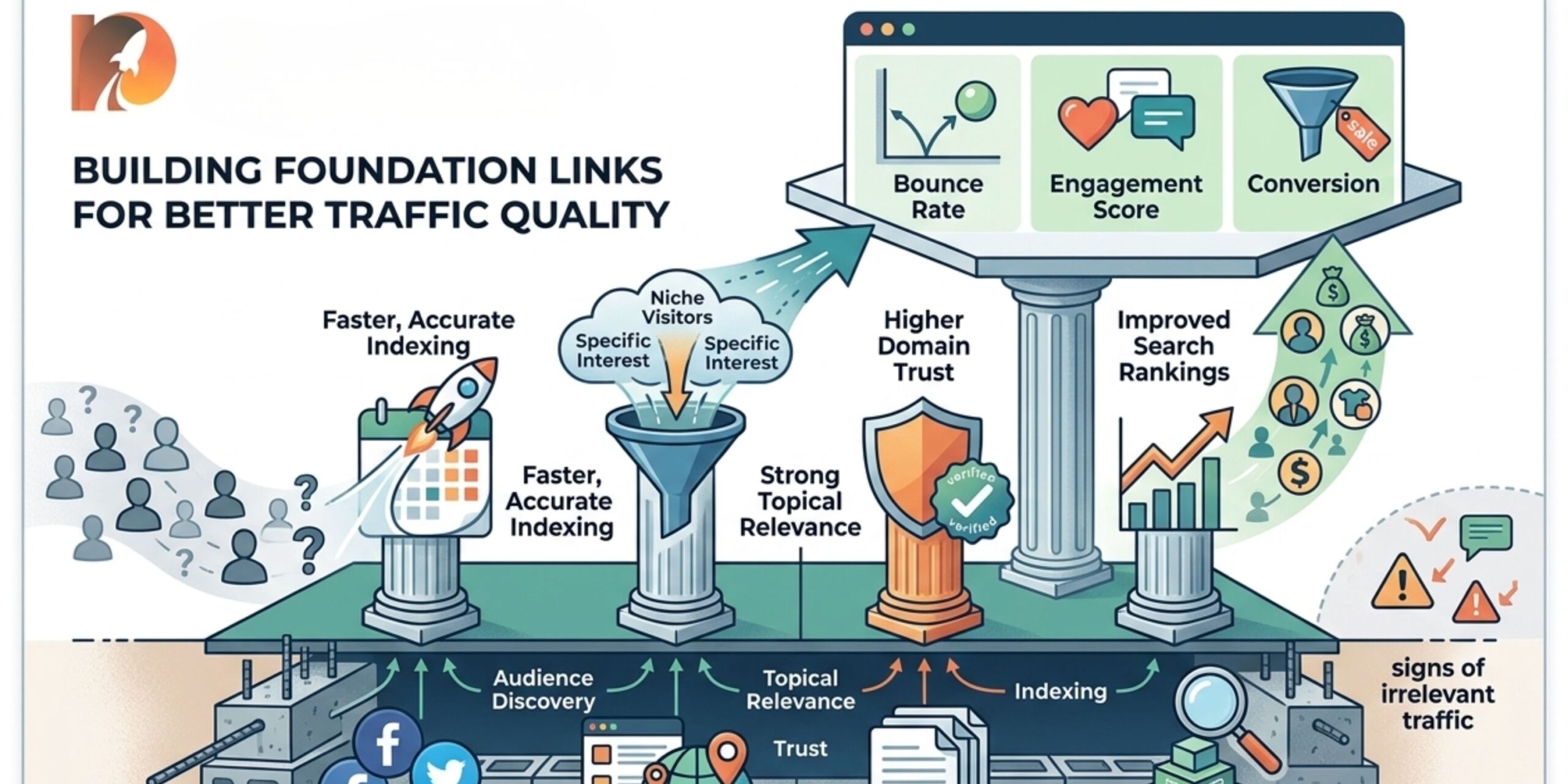
Foundation links don’t just increase traffic—they improve traffic quality and relevance.
1. Better Indexing Means Better Targeting
Search engines need to properly discover and categorize your website before they can send relevant users.
- Foundation links help search engines crawl and index your pages faster.
- Proper indexing ensures your content is matched with the right search queries.
When your site is correctly indexed, the traffic you receive is far more relevant.
2. Stronger Topical Relevance Signals
Foundation links placed on niche-relevant platforms help Google understand what your website is about.
- Directory listings and niche profiles reinforce your industry topic.
- Social and community links create contextual signals around your content.
This improves keyword targeting accuracy, bringing in visitors who are actually interested in your content or services.
3. Improved Trust Leads to Higher-Quality Rankings
Google prioritizes websites with strong trust signals.
- Foundation links build early credibility for your domain.
- Higher trust leads to better rankings for relevant search terms.
Better rankings in the right keywords = more targeted traffic, not just more traffic.
4. Audience Discovery Across Multiple Channels
Foundation links don’t only help SEO—they expand your digital footprint.
- Social media profiles
- Forum mentions
- Directory listings
- Web 2.0 content
Each of these becomes a new discovery path for your audience. This increases the chances of attracting users who are genuinely interested in your niche.
5. Reduced Bounce Rates and Better Engagement
When traffic is relevant, users stay longer and engage more.
- Foundation links help attract users who match your niche intent.
- Relevant visitors are more likely to read content, explore pages, and convert.
This improves overall SEO performance because engagement signals matter to search engines.
Signs You Are Getting Irrelevant Traffic
If your website lacks foundation links, you may notice:
- High traffic but low conversions
- Visitors leaving immediately (high bounce rate)
- Poor engagement on pages
- Low repeat visitors
- Rankings that don’t match your target keywords
These are signs your traffic is not properly aligned with your audience.
How to Build Foundation Links for Better Traffic Quality
To attract relevant traffic, your foundation links must be strategic and consistent.
1. Use Social Media to Define Your Audience
- Create profiles on platforms where your audience is active.
- Clearly define your niche in bios and descriptions.
- Share content that reflects your website’s topic.
This helps attract users already interested in your subject area.
2. Submit to Niche-Relevant Directories
- Choose directories related to your industry, not just general listings.
- Ensure your business information is consistent.
Niche directories help search engines understand your relevance and improve traffic quality.
3. Publish Contextual Web 2.0 Content
- Write simple articles on Medium, WordPress.com, or Blogger.
- Focus on topics aligned with your website’s niche.
- Link naturally back to relevant pages.
This strengthens topical authority and attracts more targeted visitors.
4. Participate in Niche Communities
- Join forums, Reddit communities, or discussion groups in your industry.
- Share helpful insights, not spammy links.
This brings in highly relevant users who are already interested in your topic.
5. Keep Anchor Text Natural and Branded
- Use your brand name or URL in most foundation links.
- Avoid over-optimized keyword anchors.
Natural linking helps maintain trust and improves long-term SEO performance.
Best Practices for High-Quality Foundation Links
To consistently attract relevant traffic:
- Focus on niche relevance, not just quantity
- Maintain consistency across all profiles and listings
- Build links gradually for natural growth
- Diversify platforms to reach different audience segments
- Monitor traffic quality, not just volume
A strong foundation ensures your traffic is not just higher—but smarter.
Conclusion
If your website is getting traffic but not the right traffic, the problem is often not your content—it’s your foundation.
Foundation links are the key to attracting relevant, high-intent visitors by improving indexing, trust, and topical relevance. Without them, your site may attract random visitors who don’t convert or engage.
By building strong foundation links across social media, directories, Web 2.0 platforms, and communities, you create a system that brings in qualified, interested, and valuable traffic.
More traffic is good—but relevant traffic is what builds a real business. Foundation links make that possible.
FAQs
Q1. What are foundation links?
Ans. Foundation links are basic backlinks that establish trust, visibility, and relevance for a website in SEO.
Q2. How do foundation links improve traffic quality?
Ans. They help search engines understand your niche and show your site to more relevant users.
Q3. Can I get traffic without foundation links?
Ans. Yes, but it may be low-quality or irrelevant traffic with poor conversions.
Q4. Which platforms are best for foundation links?
Ans. Social media, niche directories, Web 2.0 blogs, and community forums.
Q5. Do foundation links help SEO rankings?
Ans. Yes, they improve trust, indexing, and topical relevance, which supports rankings.
Q6. How many foundation links should I build?
Ans. Typically 30–100 links across diverse, relevant platforms.
Q7. Do foundation links reduce bounce rate?
Ans. Yes, because they attract more relevant and interested visitors.
Q8. Should foundation links use keyword anchors?
Ans. No, branded anchors are safer and more natural for SEO.
Q9. Can foundation links help new websites more than old ones?
Ans. Yes, they are especially important for establishing early trust and visibility.
Q10. What is the biggest benefit of foundation links?
Ans. They ensure your website attracts relevant, high-quality traffic instead of random visitors.