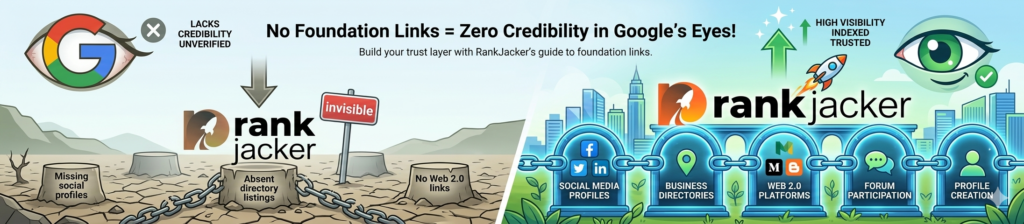
SEO isn’t just about keywords, content, or technical optimization as it starts with foundation links. These early-stage backlinks form the backbone of your website’s SEO, providing credibility, visibility, and the structural support needed to rank effectively.
Without foundation links, your SEO efforts may crumble. Your site can struggle with indexing, ranking, and reaching the right audience even if your content is top-notch.
In this guide, we’ll explore why foundation links are crucial for SEO, how broken or missing links undermine your strategy, and actionable steps to strengthen your website’s foundation for sustainable growth.
What Are Foundation Links?
Foundation links are basic backlinks created early in a website’s lifecycle to establish trust and online presence.
They typically come from:
- Social media profiles (Facebook, LinkedIn, Instagram, Twitter/X)
- Business and industry directories
- Web 2.0 platforms like Medium, WordPress.com, and Blogger
- Profile creation websites
- Forums and online communities
Unlike high-authority backlinks, foundation links focus on trust, discoverability, and indexing, forming the structural backbone of your SEO strategy.
Why Foundation Links Are the Backbone of SEO
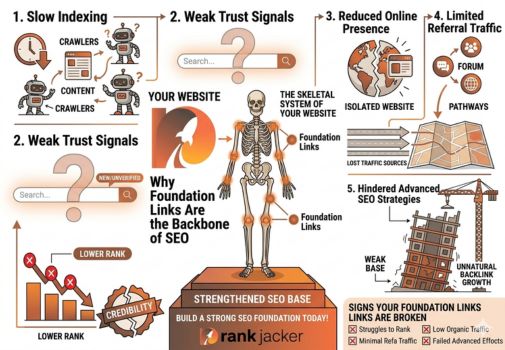
Think of foundation links as the skeletal system of your website. Without them, your SEO structure is weak, which can cause multiple issues:
1. Slow Indexing by Search Engines
Search engines rely on backlinks to discover websites.
- Without foundation links, crawlers have fewer entry points to find and index your pages.
- This slows the appearance of your content in search results, reducing traffic and visibility.
Even with excellent content, missing foundation links can prevent your site from ranking effectively.
2. Weak Trust Signals
Backlinks act as indicators of credibility.
- A website without foundation links may appear new, unverified, or untrustworthy.
- Google may rank it lower, limiting reach and SEO performance.
Foundation links provide the initial trust signals that allow your SEO to grow naturally.
3. Reduced Online Presence
Foundation links often come from diverse platforms: social media, directories, Web 2.0 sites, and forums.
- Missing these links isolates your website from multiple discovery channels.
- Your audience and search engines may struggle to find and recognize your brand.
A broken foundation leads to poor visibility and limits your website’s SEO potential.
4. Limited Referral Traffic
Many foundation links generate direct referral traffic:
- Directory listings, social media profiles, and forum links drive visitors to your website.
- Without them, your site loses potential traffic sources, reducing SEO impact and engagement.
Foundation links create multiple pathways that increase your site’s reach and authority.
5. Hindered Advanced SEO Strategies
High-authority backlinks, guest posts, and PR campaigns are more effective when your website has a strong foundation link profile.
- Without a base, these advanced strategies may appear unnatural.
- Foundation links support natural backlink growth, boosting overall SEO performance.
Signs Your Foundation Links Are Broken
Your SEO foundation may be weak if:
- Your website struggles to rank despite quality content
- Organic traffic remains low
- Referral traffic from directories or social media is minimal
- Google indexes your site slowly or inconsistently
- Advanced SEO efforts fail to improve performance
If these signs are present, your foundation links may be missing, broken, or poorly built.
How to Fix and Strengthen Your Foundation Links
Building and maintaining strong foundation links ensures your SEO backbone is secure:
1. Establish and Optimize Social Media Profiles
- Create accounts on Facebook, LinkedIn, Instagram, Twitter/X, and relevant platforms.
- Include your website URL and consistent brand information.
- Post regularly to engage audiences and build trust.
Social media links provide both credibility and referral traffic for SEO.
2. Submit Your Website to Reputable Directories
- Use general and industry-specific directories.
- Ensure all business information is accurate and consistent.
Directory listings improve discoverability and create reliable backlinks that support your SEO.
3. Publish Content on Web 2.0 Platforms
- Platforms like Medium, WordPress.com, and Blogger allow backlinks to your website.
- Even short posts strengthen your backlink profile and improve visibility.
Web 2.0 content increases exposure, authority, and indexing speed.
4. Participate in Forums and Online Communities
- Engage in niche-specific forums and communities.
- Include your website in profiles or signature links naturally.
Community engagement boosts referral traffic, credibility, and SEO signals.
5. Use Branded Anchor Text
- Most foundation links should use your brand name or website URL.
- Avoid keyword-heavy anchors to maintain a natural profile.
Branded anchors strengthen your brand identity while supporting a solid SEO structure.
Best Practices for Maintaining Foundation Links
To keep your SEO backbone strong:
- Regularly monitor links to ensure they remain active
- Update profiles and directory listings when information changes
- Add new links gradually to maintain natural growth
- Diversify link types to reach multiple audiences
A well-maintained foundation link profile ensures your SEO strategy remains strong, credible, and effective.
Conclusion
Foundation links are the backbone of SEO. Without them, your website struggles to rank, gain credibility, attract referral traffic, and reach your audience. Missing or broken foundation links leave your SEO strategy weak, no matter how much content, marketing, or technical optimization you perform.
Building and maintaining foundation links across social media, directories, Web 2.0 platforms, and communities ensures your SEO backbone is strong and your website can thrive.
Check your foundation today because a broken backbone can jeopardize your entire SEO strategy.
FAQs
Q1. What are foundation links?
Ans. Foundation links are early-stage backlinks that establish credibility, visibility, and trust for a website.
Q2. Why are foundation links the backbone of SEO?
Ans. They provide the initial structure, trust signals, indexing pathways, and visibility that all other SEO efforts depend on.
Q3. Can SEO succeed without foundation links?
Ans. It may, but growth is slow, credibility is weak, and search engines struggle to discover your site.
Q4. Which platforms provide effective foundation links?
Ans. Social media profiles, reputable directories, Web 2.0 blogs, forums, and community websites.
Q5. Should foundation links use keyword-rich anchors?
Ans. No, branded anchors or plain URLs are more natural and safer for SEO.
Q6. How many foundation links should a website start with?
Ans. Typically, 30–100 links across diverse platforms provide a solid foundation.
Q7. Can foundation links increase referral traffic?
Ans. Yes, they create multiple pathways for users to visit your website.
Q8. Do foundation links enhance advanced SEO campaigns?
Ans. Yes, they create credibility and a natural link structure that improves high-authority backlinks’ impact.
Q9. How often should foundation links be monitored?
Ans. Every few months to ensure they remain active, accurate, and diverse.
Q10. What is the main benefit of foundation links?
Ans. They stabilize your website’s SEO, improve visibility, and create multiple pathways for search engines and users to discover your content.