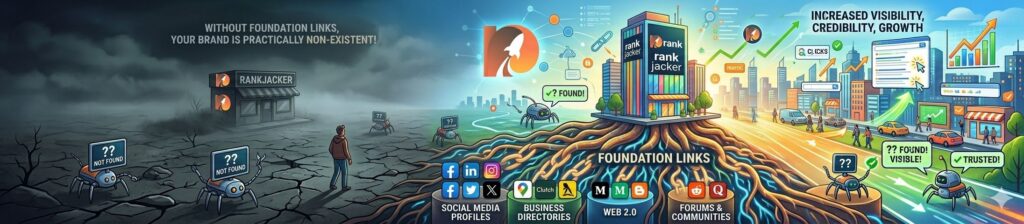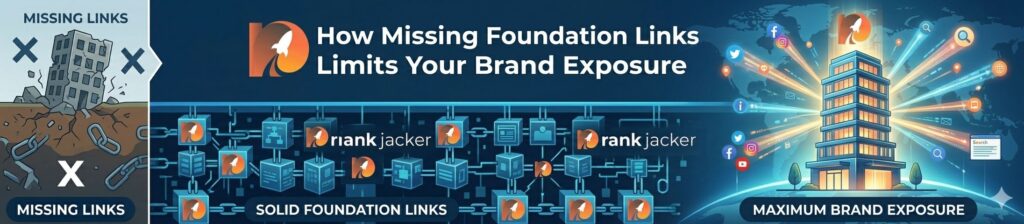
Backlinks are a cornerstone of SEO, but not all backlinks have the same impact. Websites with carefully curated foundation links with high-quality, authoritative backlinks often outperform competitors in search rankings and organic traffic growth.
In this success story, we’ll detail how a well-planned foundation link strategy transformed a client’s website, providing actionable insights for marketers, SEO beginners, and website owners seeking sustainable SEO results.
The Client’s Challenge
Our client, a mid-sized e-commerce website specializing in eco-friendly products, faced the following challenges:
- Low domain authority (DA 22) despite high-quality content
- Limited organic traffic and search visibility
- Few backlinks from reputable, authoritative sources
- Difficulty ranking for competitive keywords like “sustainable home goods” and “eco-friendly products online”
The goal was to increase organic traffic while building a strong and credible foundation for future SEO growth.
Why We Focused on a Foundation Link Strategy
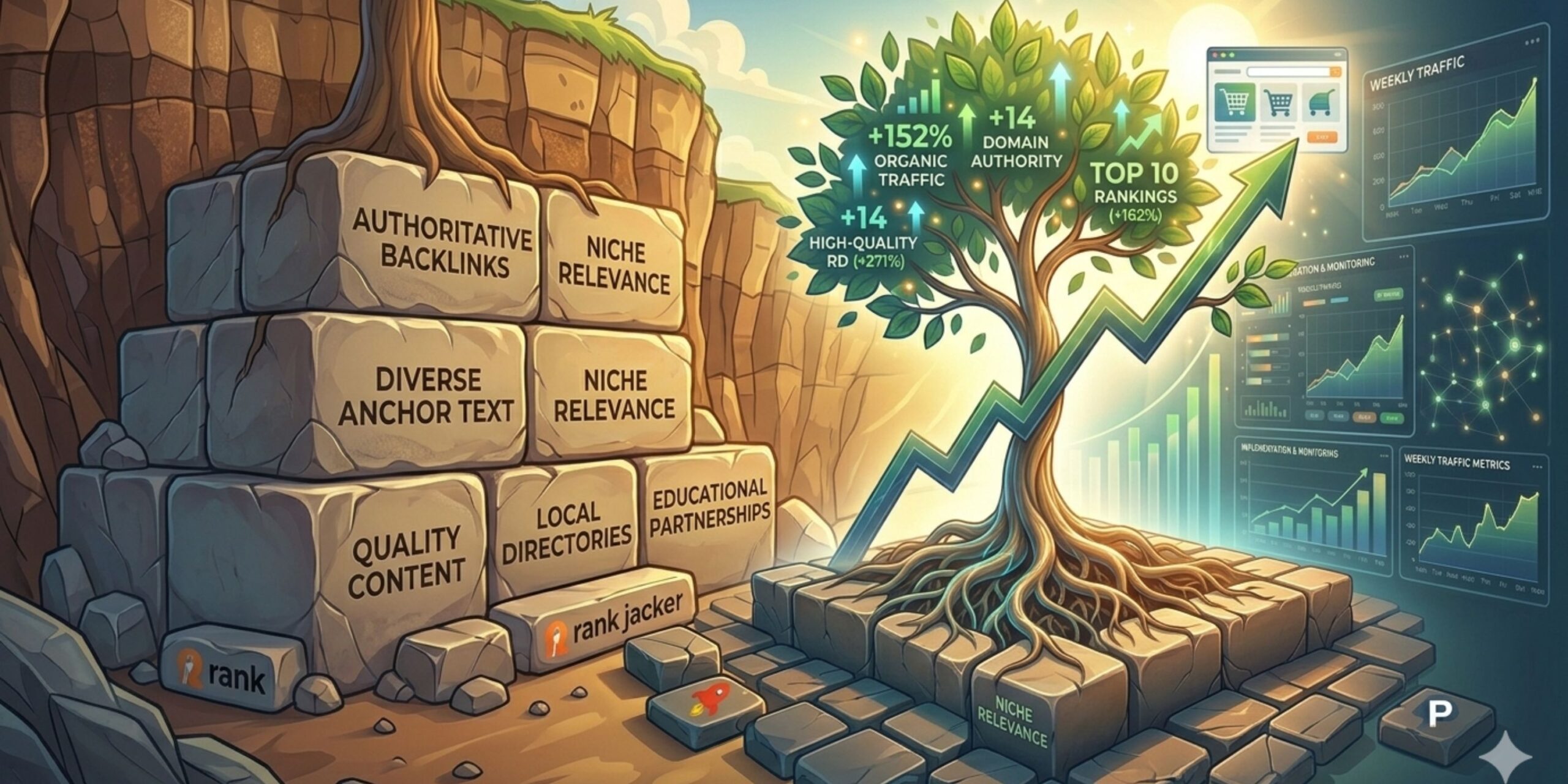
We prioritized foundation links for the following reasons:
- Authority Building – High-quality, niche-relevant links signal trust to search engines.
- Long-Term SEO Growth – Foundation links create a base for future link-building campaigns.
- Traffic and Referral Benefits – Links from authoritative sources drive relevant visitors to the site.
- Resilience to Algorithm Updates – Strong foundational links help maintain rankings even after Google algorithm changes.
Instead of chasing high-DA backlinks immediately, we built a stable, credible link profile to maximize long-term results.
Step 1: Foundation Link Audit
Before acquiring new links, we conducted a comprehensive audit of the existing backlink profile:
- Collected data using Ahrefs and Google Search Console
- Identified low-quality, spammy, or irrelevant backlinks
- Analyzed anchor text diversity to detect over-optimization
- Reviewed niche relevance and link distribution
Findings:
- 65% of existing backlinks were from low-quality or irrelevant sources
- No links from authoritative industry blogs, directories, or media outlets
- Anchor text was heavily skewed toward exact-match keywords
The audit allowed us to clean up the profile and set a baseline for acquiring high-quality foundation links.
Step 2: Foundation Link Strategy
We implemented a multi-layered approach to build high-quality, relevant backlinks:
1. Industry-Specific Authority Links
- Secured backlinks from eco-friendly blogs, sustainability websites, and niche resource pages.
- Featured guest posts and collaborative guides that aligned with the client’s content.
2. Local and Professional Directories
- Listed the website on local business directories and sustainability-focused platforms.
- Created profiles on relevant associations and organizations.
3. Educational and Community Partnerships
- Sponsored small community initiatives and educational programs.
- Earned links from local universities and environmental organizations.
4. Content-Driven Editorial Links
- Produced comprehensive guides and infographics that were naturally referenced by authoritative sources.
- Encouraged shares and mentions through email outreach and social media promotion.
Anchor Text Strategy:
- Balanced branded, long-tail, generic, and natural anchor text to maintain a safe and natural link profile.
Step 3: Implementation and Monitoring
- Tracked all new backlinks using Ahrefs, SEMrush, and Google Search Console.
- Monitored referring domain quality, relevance, and link equity.
- Measured organic traffic and keyword rankings weekly to assess impact.
This ensured that every foundation link contributed measurable SEO value while keeping the profile natural and diversified.
Results After 6 Months
The well-planned foundation link strategy produced substantial results:
| Metric | Before | After (6 months) | Change |
| Domain Authority | 22 | 36 | +14 |
| Organic Traffic | 3,100 | 7,800 | +152% |
| Keywords Ranking Top 10 | 21 | 55 | +162% |
| High-Quality Referring Domains | 14 | 52 | +271% |
Highlights:
- Steady ranking improvements for both primary and long-tail keywords
- Increased referral traffic from authoritative niche sources
- Stronger backlink profile that supported future high-DA link campaigns
Key Lessons from This Success Story
- Start With Foundation Links First – Building a credible base amplifies the effectiveness of all future SEO efforts.
- Quality Beats Quantity – One authoritative, niche-relevant link is more valuable than dozens of low-quality backlinks.
- Content Is King – Guides, infographics, and research attract natural editorial links.
- Anchor Text Diversity Matters – Avoid over-optimization to maintain a natural backlink profile.
- Monitor and Maintain – Regular audits ensure links remain relevant, authoritative, and effective.
Actionable Tips for Website Owners
If you want to replicate this success:
- Audit Your Current Links: Identify gaps and remove low-quality backlinks.
- Target Authoritative Sources: Focus on industry blogs, directories, local organizations, and educational sites.
- Create Linkable Content: Develop guides, infographics, or research reports to attract editorial mentions.
- Outreach Strategically: Reach out to niche-relevant websites, organizations, and influencers for collaboration.
- Track and Optimize: Monitor backlinks, anchor text distribution, and organic traffic regularly.
Conclusion
This success story demonstrates that a well-planned foundation link strategy can significantly increase organic traffic, improve domain authority, and create a sustainable SEO foundation.
FAQs
Q1. What are foundation links?
Ans. High-quality, authoritative backlinks that form the core of a website’s link profile.
Q2. Why are foundation links important for SEO?
Ans. They provide credibility, boost domain authority, and support long-term ranking improvements.
Q3. How long does it take to see results from foundation links?
Ans. Typically 3–6 months, depending on the link quality, niche, and competition.
Q4. Can foundation links increase organic traffic?
Ans. Yes. They not only improve rankings but also drive referral traffic from authoritative sources.
Q5. How do I find foundation link opportunities?
Ans. Focus on niche blogs, industry publications, educational and government sites, and local directories.
Q6. Should anchor text be optimized?
Ans. Yes, but maintain diversity with branded, long-tail, generic, and natural anchors.
Q7. Can foundation links replace other SEO strategies?
Ans. No. They complement content optimization, technical SEO, and social signals for holistic SEO performance.
Q8. How many foundation links should I aim for?
Ans. Quality over quantity. Start with a handful of authoritative, relevant links and scale naturally.
Q9. Are foundation links a one-time effort?
Ans. No. They require ongoing monitoring, content creation, and outreach to maintain a strong profile.
Q10. Can foundation links help smaller websites compete with larger competitors?
Ans. Absolutely. By building credibility and authority, even smaller websites can rank for competitive keywords over time.