
In search engine optimization, backlinks remain one of the most important factors that influence rankings. However, not all backlinks are equal. Search engines evaluate not only the number of links pointing to a website but also how natural and trustworthy those links appear.
For new websites especially, building a natural-looking foundation link profile is essential. Without this foundation, even high-quality backlinks may not deliver the full SEO benefits.
Foundation links are the initial backlinks that establish a website’s presence across the internet. They typically come from social profiles, directories, community platforms, and other common websites where legitimate businesses and brands usually appear.
When created correctly, foundation links help search engines understand that your website is authentic and part of a broader digital ecosystem.
This article explains how to build a natural foundation link profile that search engines trust, why it matters, and the best strategies to ensure your link-building efforts remain safe and effective.
What Is a Natural Foundation Link Profile?
A natural foundation link profile is a diverse collection of basic backlinks that appear organic and realistic to search engines.
Instead of focusing on aggressive keyword-driven links, a natural foundation profile emphasizes:
- Brand presence
- Link diversity
- Gradual link growth
- Reputable platforms
These links typically form the first layer of a website’s backlink structure.
A natural link profile reflects how real websites grow online. Businesses usually appear across social networks, business directories, community platforms, and content-sharing sites.
By replicating this natural pattern, your website becomes easier for search engines to trust.
Why Google Prefers Natural Link Profiles
Search engines continuously update their algorithms to detect artificial link-building practices.
Websites with unnatural backlink patterns may face ranking penalties or reduced visibility.
Creating a natural foundation link profile helps prevent these risks.
Building Trust Signals
Search engines evaluate whether a website appears legitimate. When your brand is listed across multiple platforms, it creates trust signals that confirm your online presence.
Foundation links contribute to these signals by showing that your website exists within a network of credible platforms.
Supporting Organic Growth
A natural link profile grows gradually. Instead of acquiring hundreds of links instantly, links appear over time from different sources.
This organic growth pattern helps search engines view your website as authentic rather than manipulated.
Strengthening Future Link Building
A well-built foundation makes advanced link-building strategies more effective.
When a website already has a balanced link profile, additional backlinks from guest posts, editorial mentions, and partnerships appear more natural.
This increases their overall SEO value.
Key Characteristics of a Natural Foundation Link Profile
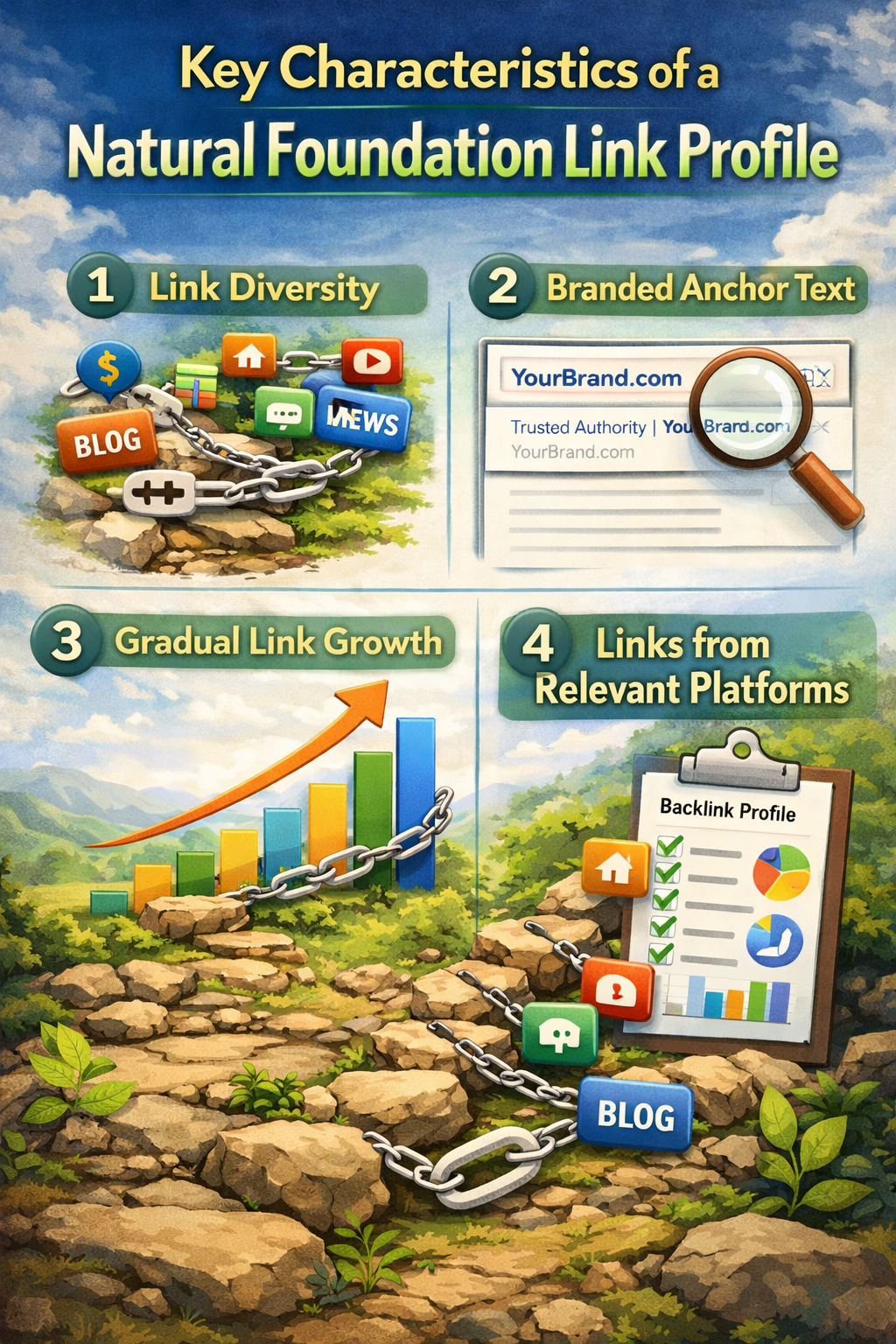
Understanding what makes a link profile look natural can help guide your strategy.
Link Diversity
Natural backlink profiles include links from different types of websites.
These may include:
- Social media platforms
- Business directories
- Blogging platforms
- Community forums
- Profile pages
Diversity prevents your backlink profile from appearing overly optimized or manipulated.
Branded Anchor Text
Most foundation links use branded anchors or plain URLs.
Examples include:
- YourBrand
- YourBrand.com
- www.yourbrand.com
Keyword-heavy anchors are rarely used in early-stage link building because they can appear unnatural.
Branded anchors help maintain a safe and organic link profile.
Gradual Link Growth
Natural backlinks appear over time rather than all at once.
A sudden spike in links may signal manipulation to search engines.
Instead, focus on creating links steadily across several weeks or months.
Links from Relevant Platforms
Although foundation links are not always niche-specific, they should come from reputable and widely used platforms.
Links from well-known websites carry more trust signals than those from obscure or spammy sources.
Essential Types of Foundation Links
To create a natural link profile, it is important to include several different types of foundation links.
Social Media Profiles
Social media links are among the most important foundation links.
Businesses typically create profiles on multiple platforms when establishing their online presence.
Common platforms include:
- Twitter/X
These profiles help search engines associate your website with legitimate social platforms.
Business Directory Listings
Directories allow businesses to list their contact information and website details.
These listings strengthen brand recognition and credibility.
Examples include general directories and industry-specific directories.
For local businesses, directory listings also contribute to local SEO.
Web 2.0 Platforms
Web 2.0 sites allow users to publish content that can include backlinks.
Popular examples include:
- Medium
- WordPress.com
- Blogger
- Tumblr
These platforms allow businesses to create simple content pieces that reference their main website.
Profile Creation Links
Many websites allow users to create profiles that include a website link.
These links expand your brand’s presence across the internet.
Although individually weak, they collectively contribute to a natural link profile.
Forum and Community Links
Forums and online communities can also provide foundation links.
These links often appear in:
- User profiles
- Discussion signatures
- Relevant posts
Participating in discussions can also increase brand visibility.
Steps to Build a Natural Foundation Link Profile
Building a natural foundation link profile requires a structured approach.
Step 1: Establish Social Media Presence
Start by creating profiles for your brand on major social media platforms.
Ensure that all profiles include:
- Your website URL
- Consistent branding
- Accurate business information
These links form the first layer of your foundation profile.
Step 2: Create Business Listings
Next, submit your website to reputable directories.
Choose directories that are:
- Established
- Relevant
- Moderated
Avoid low-quality directories that exist solely for link-building purposes.
Step 3: Publish Web 2.0 Content
Create simple blog posts or articles on Web 2.0 platforms.
These posts can discuss your industry, services, or expertise.
Include a natural reference to your main website.
Step 4: Build Profile Links
Sign up for reputable websites that allow profile creation.
Add your website link within the profile description.
These links help diversify your backlink profile.
Step 5: Engage in Communities
Join relevant forums or discussion platforms.
Participate in discussions and contribute valuable insights.
Where appropriate, include your website in your profile or signature.
Best Practices for Safe Foundation Link Building
Following best practices ensures your foundation links remain safe and effective.
Maintain Consistent Brand Information
Consistency is critical when creating links across multiple platforms.
Your business name, address, and website URL should remain identical everywhere.
Inconsistent information can confuse search engines and weaken trust signals.
Avoid Spammy Platforms
Low-quality websites can harm your backlink profile.
Focus on reputable platforms that have real users and active communities.
Quality matters more than quantity.
Prioritize Relevance and Authenticity
Even though foundation links are basic, they should still be relevant to your brand or industry whenever possible.
Authentic links provide stronger long-term value.
Balance Follow and Nofollow Links
Natural link profiles contain a mixture of follow and nofollow links.
Foundation links often include many nofollow links, especially from social platforms.
This balance helps your profile appear realistic.
Common Mistakes to Avoid
Many website owners unintentionally damage their SEO by building foundation links incorrectly.
Creating Links Too Quickly
Rapid link creation may trigger spam detection systems.
Spread your link-building efforts over time.
Using Automated Tools
Automated link-building tools often generate low-quality links.
Manual link creation provides better control and ensures higher quality.
Overusing Keyword Anchors
Keyword-heavy anchor text can appear manipulative.
Focus primarily on branded anchors.
Ignoring Link Variety
Building links from only one type of platform can make your backlink profile look unnatural.
Always include a mix of link sources.
The Long-Term Impact of a Natural Foundation Link Profile
When built properly, foundation links support your website’s SEO growth for years.
These links provide:
- Trust signals for search engines
- A diversified backlink profile
- Stronger support for future backlinks
- Improved brand visibility
Even though they are not the most powerful backlinks individually, foundation links create the structure that supports more advanced SEO strategies.
Conclusion
Creating a natural-looking foundation link profile is one of the most important steps in building a successful SEO strategy.
These initial backlinks establish trust, improve brand visibility, and prepare your website for more advanced link-building efforts.
By focusing on diversity, branded anchors, gradual growth, and reputable platforms, website owners can build a foundation that search engines recognize as authentic.
A strong foundation not only protects your website from SEO risks but also strengthens the impact of every backlink you earn in the future.
FAQs
Q1. What is a foundation link profile?
Ans. foundation link profile is the initial set of backlinks that establish a website’s credibility and online presence.
Q2. Why does Google prefer natural backlink profiles?
Ans. Natural profiles indicate authentic website growth and reduce the risk of manipulation.
Q3. What anchor text should foundation links use?
Ans. Most foundation links should use branded anchor text or plain URLs.
Q4. Are social media links considered foundation links?
Ans. Yes, social media profiles are one of the most common types of foundation links.
Q5. How long does it take to build a foundation link profile?
Ans. It usually takes several weeks to build a natural and balanced profile.
Q6. Do foundation links directly increase rankings?
Ans. They mainly support SEO indirectly by building trust and link diversity.
Q7. Can foundation links help new websites get indexed faster?
Ans. Yes, they create additional paths for search engine crawlers to discover your website.
Q8. Should foundation links be dofollow or nofollow?
Ans. Natural profile contains a mix of both.
Q9. Are directory links still useful for SEO?
Ans. Yes, reputable directories still provide trust signals and brand visibility.
Q10. What comes after building foundation links?
Ans. After establishing foundation links, websites usually focus on guest posting, editorial links, and other high-authority backlinks.