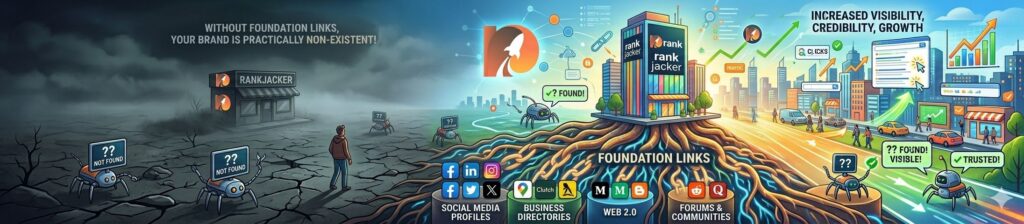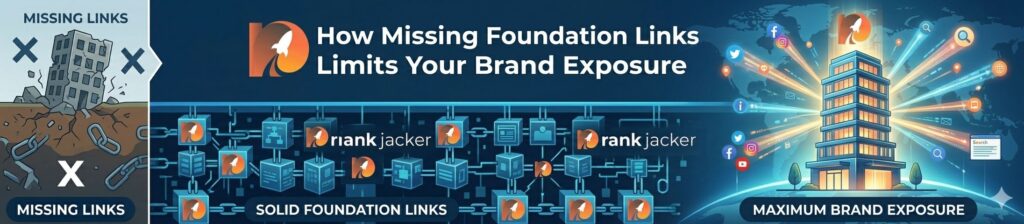
Every website owner dreams of ranking on the first page of Google, attracting traffic, and converting visitors into loyal customers. Yet, many websites fail to realize that without foundation links, their SEO efforts are building on shaky ground.
Foundation links are the initial backlinks that establish credibility, trust, and online presence. They are the essential first layer of your website’s backlink profile. Without them, even the best content, keyword strategy, and technical SEO may struggle to make an impact.
Think of your website as a house. Foundation links are the foundation. Without it, everything else such as walls, roof, and interior may eventually collapse. Ignoring these basic backlinks leaves your website vulnerable, slow to index, and weak in Google’s eyes.
In this guide, we’ll explore why foundation links are critical, what happens if you ignore them, and how to safely build them for long-term SEO success.
What Are Foundation Links?
Foundation links are basic backlinks that most websites should create early in their SEO journey. They typically come from:
- Social media profiles
- Business directories
- Web 2.0 blogging platforms
- Profile creation websites
- Online forums and community sites
Unlike high-authority backlinks from guest posts or editorial mentions, foundation links are less about immediate ranking power and more about establishing a trustworthy online presence.
They signal to search engines that your website is real, active, and integrated into the digital ecosystem. Without them, Google may treat your website as new, unreliable, or even suspicious.
Why Your Website Is a Time Bomb Without Foundation Links
Ignoring foundation links can have long-term consequences for your SEO strategy. Here’s why:
1. Slow Indexing and Discovery
Search engines discover websites primarily through links. A new website without foundation links may remain invisible for weeks or even months.
When you create early backlinks from directories, social profiles, and other credible platforms, you provide crawlers with multiple pathways to your site. Without these, Google may take longer to index your pages, delaying your SEO progress.
2. Lack of Trust Signals
Foundation links act as trust signals for search engines.
A website with zero backlinks looks suspicious. Google may assume the site is brand new, inactive, or of low quality.
By building foundation links early, you establish credibility and show that your website is a legitimate digital entity. Without them, your website’s authority and visibility suffer.
3. Poor Backlink Diversity
A healthy backlink profile is diverse, containing links from multiple types of websites.
Websites without foundation links often rely solely on high-authority backlinks later. This creates an unnatural pattern that may trigger spam signals or penalties.
Foundation links provide the base layer that ensures your backlink profile appears natural and balanced.
4. Weak Support for Advanced SEO Efforts
High-authority links like guest posts or PR coverage are more effective when your site already has basic backlinks.
Without foundation links, these advanced backlinks may not pass their full value. Search engines prefer websites with an established base; otherwise, links appear suspicious or manipulative.
5. Increased Risk of SEO Penalties
Websites that skip foundation links and pursue aggressive link-building strategies may raise red flags.
Rapid link growth without a foundation looks unnatural, and Google’s algorithms may penalize the site. Foundation links create gradual and natural link growth, reducing this risk.
How to Build Foundation Links Safely
Creating foundation links is simple but must be done correctly to be effective and safe.
1. Use Reputable Platforms
Focus on trusted sites such as:
- Facebook, LinkedIn, Twitter/X, Instagram
- Google Business Profile, Yelp, Bing Places
- Medium, WordPress.com, Blogger
Avoid spammy directories or automated link services.
2. Prioritize Branded Anchors
Most foundation links should use your brand name or plain URLs:
- YourBrand
- YourBrand.com
- www.yourbrand.com
Keyword-heavy anchor text can appear manipulative and harm your SEO.
3. Maintain Consistent Information
Keep your business or website information consistent across all links:
- Name
- Address
- Phone number
- Website URL
This consistency strengthens trust signals and helps Google verify your site.
4. Build Links Gradually
Create links over time rather than all at once.
Example timeline:
- Week 1: Social media profiles
- Week 2: Directory listings
- Week 3: Web 2.0 posts
- Week 4: Community forum and profile links
Gradual growth appears natural and avoids penalties.
5. Diversify Link Sources
A strong foundation link profile is diverse. Mix link types to create a natural-looking backlink profile.
Include:
- Social media
- Directories
- Web 2.0 blogs
- Forums and communities
- Profile pages
When Should You Start Building Foundation Links?
The best time to create foundation links is as soon as your website is live.
Early link building:
- Accelerates indexing
- Establishes trust signals
- Prepares your site for future backlinks
Even older websites without a foundation can benefit from building these links later. It’s never too late to strengthen the base of your backlink profile.
Common Mistakes to Avoid
Even basic link-building strategies can go wrong. Avoid these mistakes:
- Skipping foundation links entirely – leads to slow growth and weak trust signals.
- Using spammy directories – may harm your website instead of helping it.
- Overusing keyword anchors – makes your profile appear manipulative.
- Building too many links at once – unnatural growth raises red flags.
- Ignoring link diversity – limits credibility and SEO effectiveness.
Long-Term Benefits of Foundation Links
When done correctly, foundation links provide long-lasting SEO benefits:
- Faster indexing and website discovery
- Improved trust and credibility
- Balanced and diverse backlink profile
- Better performance for high-authority backlinks
- Reduced risk of penalties
In short, foundation links set your website up for sustainable SEO success. Without them, your website becomes a ticking SEO time bomb.
Outgoing Thoughts
Foundation links are more than just a basic SEO step as they are the lifeline of a website’s credibility and long-term performance.
Without them, your website risks slow indexing, weak trust signals, unbalanced backlink profiles, and poor performance in search engines. In essence, your SEO strategy is building on unstable ground.
Creating foundation links early, gradually, and safely ensures that your website has a solid base to grow on. They are the essential first layer that supports every future link-building effort and keeps your website ticking safely rather than ticking like a time bomb.
Start building your foundation links today, and give your website the stable SEO base it needs to thrive.
FAQs
Q1. What are foundation links in SEO?
Ans. Foundation links are the first set of backlinks created to establish credibility, trust, and online presence for a website.
Q2. Why are foundation links important?
Ans. They help with indexing, trust signals, backlink diversity, and support future SEO efforts.
Q3. Can my website rank without foundation links?
Ans. It’s possible, but rankings may be slower, and the site may appear less credible to search engines.
Q4. How quickly should I build foundation links?
Ans. Gradually over several weeks to appear natural and avoid penalties.
Q5. Which platforms provide the best foundation links?
Ans. Social media, reputable directories, Web 2.0 blogs, forums, and profile creation sites.
Q6. Should foundation links use keywords in anchor text?
Ans. No, they should mostly use branded anchors or plain URLs.
Q7. Can older websites still benefit from foundation links?
Ans. Yes, adding them improves link diversity and strengthens credibility.
Q8. Are foundation links permanent?
Ans. Some may last indefinitely, but others can disappear if platforms remove inactive accounts.
Q9. How do foundation links support advanced SEO efforts?
Ans. They create a credible base, making high-authority backlinks appear more natural.
Q10. What happens if I ignore foundation links?
Ans. Your website risks slow indexing, weak trust signals, unbalanced backlink profiles, and lower SEO performance.